

Gender equality is first and foremost a right and is essential to achieving social, economic, and human development. A cross-cutting and highly crucial goal, SDG 5 Gender Equality, is the cornerstone for closing the gender gap and achieving the 2030 Sustainable Development Agenda. It is especially urgent to address and actively work toward gender equity, as Pakistan recently ranked 151 out of 153 countries in the Global Gender Gap Report 2020, published by the World Economic Forum. Studies show that removing barriers to women’s economic empowerment can considerably reduce poverty as women lift themselves, their families, and entire communities out of poverty. Women’s economic empowerment is also a driver of economic growth for countries. Women constitute over 51% of Pakistan’s population, and their participation in the labor market can help the economy grow, increase economic diversification, and achieve other positive development outcomes.
Given that the global economic gains from reducing gender inequality are considerable, $5.3 trillion by 2025, the progress on SDGs in general and on Goal 5 is subject to addressing the myriad structural and functional challenges for promoting gender equity and inclusive economic growth in Pakistan. Most importantly, lack of institutional capacity to streamline gender in development planning and programing is one of the key reasons in the slow progress of the country on SDGs agenda.
Mainstreaming Gender is a key priority area for the Punjab SDGs Support Unit. Enabling and achieving women’s economic emancipation and social protection is an essential component of the Punjab SDGs Support and a key priority area to ensure inclusive and sustainable development across Punjab.
The Punjab SDGs Unit extensively engaged the parliamentarians, government departments, civil society, academia, think tanks, and media through policy dialogues, consultations, and webinars. These engagements aimed to provide research and data support on gender-related indicators, expound on the demand for Gender-responsive budgeting, and suggest comprehensive policy solutions to end Gender-based violence and close the Gender gap through women’s economic empowerment in Punjab.
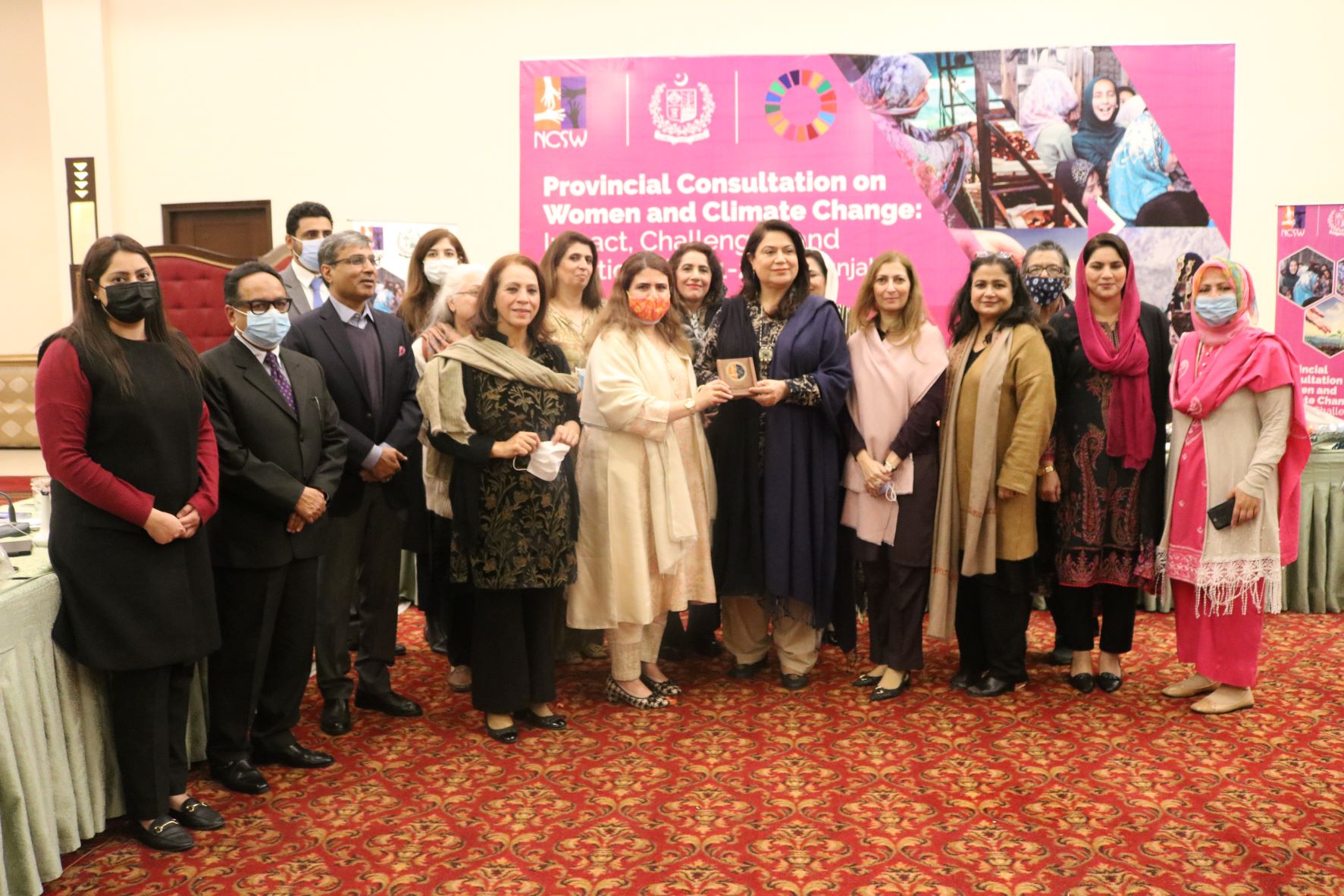
The Unit also scaled up the debate on the gendered impact of climate change at the provincial level by organizing a Provincial consultation with gender and climate change experts, policy practitioners, and representatives from the public & private sector on Women and Climate Change – ‘Impact, Challenges, and Solutions.’ The consultation provided a platform for the experts to discuss how climate change impacts inequalities in Pakistan, suggest measures to overcome structural barriers and provide actionable policy recommendations to address these disparities at the provincial level.
Most recently, the Unit held a two-day capacity-building session on “Gender Mainstreaming in SDGs Programming, which aimed to build gender competence to overcome the gender knowledge gaps and develop technical skills to conduct gender analysis, planning, and programming. Through this training session, the Punjab SDGs Unit engaged the participants from Provincial line departments, CSOs, private sector, and academia to learn practical skills through group exercises on institutionalizing Gender mainstreaming in SDG policy, gender-inclusive methodologies, monitoring & evaluation, and programming & budgeting to achieve SDG 5 in Pakistan.