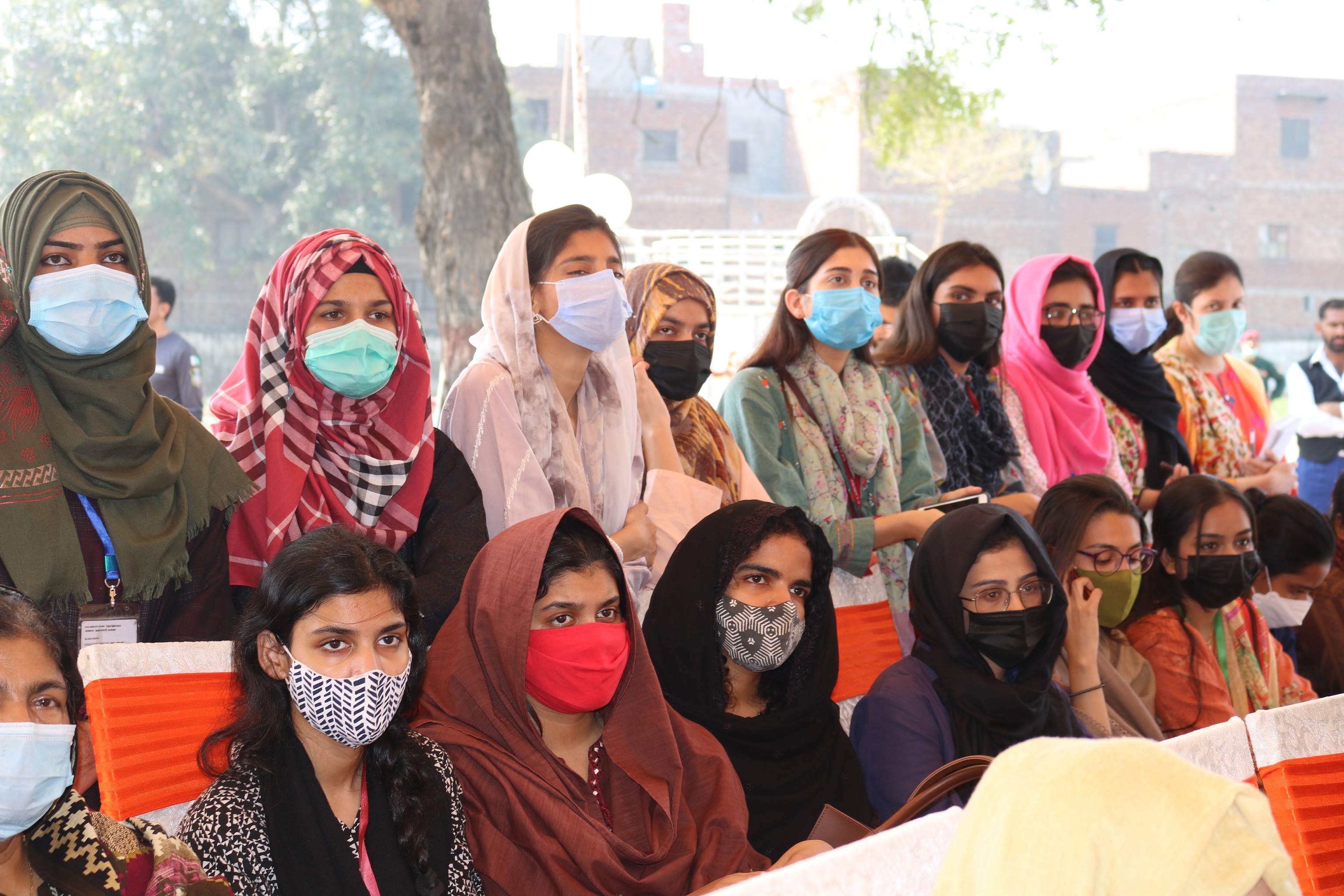


In Pakistan, often barriers to mobility inhibit women and girls from going to schools, colleges, universities, and offices, and taking part in other economic opportunities. Surveys and empirical research cite that a majority of women in Pakistan consider mobility constraints as an important indicator that determines their likelihood of attaining employment as well as accessing higher education. Some of these barriers to mobility include lack of access to transport services, low ownership of vehicles, dependence on men (fathers, brothers, husbands, etc.) for transportation needs, unsafe public spaces, and rampant street harassment.
The Punjab SDGs Unit trained over 180 women and girls to ride motorcycles (which is the primary mode of transportation for the majority in Pakistan), under its Women-on-Wheels (WoW) initiative to improve their mobility, increase autonomy and reclaim public spaces for them. Providing this skill will enable women and girls to overcome mobility constraints that hinder them from accessing various education and employment opportunities. Additionally, the Women on Wheels (WoW) initiative helped the participants equip with knowledge of anti-harassment laws, helplines, and protections available to combat road harassment, receive road safety and anti-harassment training & licenses, and find decent work & economic opportunities. The Women on Wheels (WoW) program is a movement that pushes for the social and economic empowerment of women by simultaneously creating mechanisms whereby women can actively transition and integrate into the formal economy.
It not only aligns with SDG 5 (Gender Equality) where it provides skills-based training to women and girls to improve their mobility, and independence, but by removing barriers to mobility it further reduces inequalities (SDG 10), improves education (SDG 4) and provides decent work and economic opportunities (SDG 8). It provides a sustainable and inclusive model of development where training girls helps them fend for themselves in the long run rather than providing a one-time intervention.